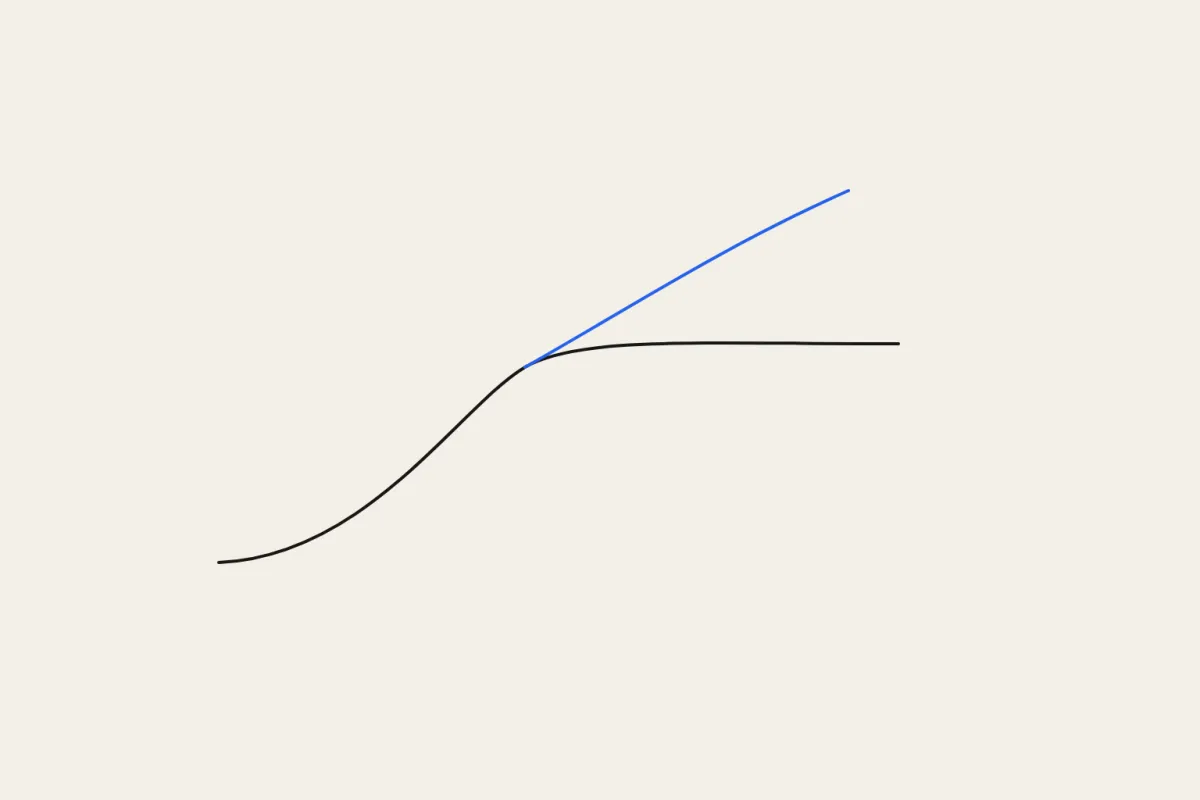
When Your Experience Stops Compounding
The quiet fear underneath the AI conversation isn't about your job. It's about your moat.
For your whole career, experience was the thing that compounded. Each year added judgment to the last -- patterns you'd seen, mistakes you'd already made, a feel for what good looks like that no junior could fake. The moat got wider every year, and the width was the point. It was why you were worth what you were worth.
Then you watch a model do, in seconds, something that took you a decade to learn. And a colder question arrives than "will I be replaced." It's: is the thing I've spent fifteen years building -- my experience -- still worth anything?
The devaluation is real, but it's specific
People describe it the same way: one year of experience repeated eight times; a sense that the depth they banked is being marked down; the unease of being the most senior person in the room and the least sure they belong there. The question stops being "how do I get promoted" and becomes "am I still who I thought I was." That's not a career worry. It's an identity one, and it's why it keeps you up.
But the devaluation is specific, not total, and the specificity is the whole game. What the model commoditizes is the execution of known patterns -- the replicable, teachable, already-solved part of your expertise. Here's the part nobody says out loud: that part of your experience was always going to plateau. The hundredth time you implement the same kind of thing, you're not compounding anymore; you're repeating. AI didn't devalue that work. It just made the plateau arrive faster, and in public.
What still compounds
There's another half of experience, and the model doesn't touch it: the half that decides which problem is worth solving, what "good enough" actually means here, when the obvious answer is quietly wrong, which bet to make with incomplete information. Judgment. Taste. The read on what matters. That kind of experience still compounds -- and it compounds faster now, because the cost of executing on a good judgment just dropped to nearly zero. The person with taste and a model is more dangerous than they have ever been.
The trap inside the fear
Here's where it turns into a loop. The relevance anxiety, left alone, pushes you toward the wrong move: you retreat into the executional work you're certain you're good at -- the very work the model does best and the market values least -- and there's early evidence that leaning on the assistant quietly erodes the independent capability underneath. It's the competence refuge in its most expensive form: hiding from the senior, judgment-shaped, exposing work by burying yourself in the IC work that feels safe. The fear, acted on, manufactures the exact obsolescence it's afraid of.
The move
The experience that stopped compounding is the kind you could write down in a manual. Let it go; the machine has it now. The kind you can't write down -- the judgment, the taste, the sense of what's worth doing -- is the kind to spend your hours on, deliberately, especially when it's the harder, less certain work.
Your moat didn't disappear. It moved. It's just no longer where you spent fifteen years getting comfortable.
Sources
- On AI assistance reducing persistence and weakening independent performance -- the capability underneath can atrophy when you lean on the tool: AI Assistance Reduces Persistence and Hurts Independent Performance (2026).
- On the cognitive paradox of AI -- the same tool can enhance output and erode the underlying skill depending on how it's used: The cognitive paradox of AI in education: between enhancement and erosion, Frontiers in Psychology (2025).