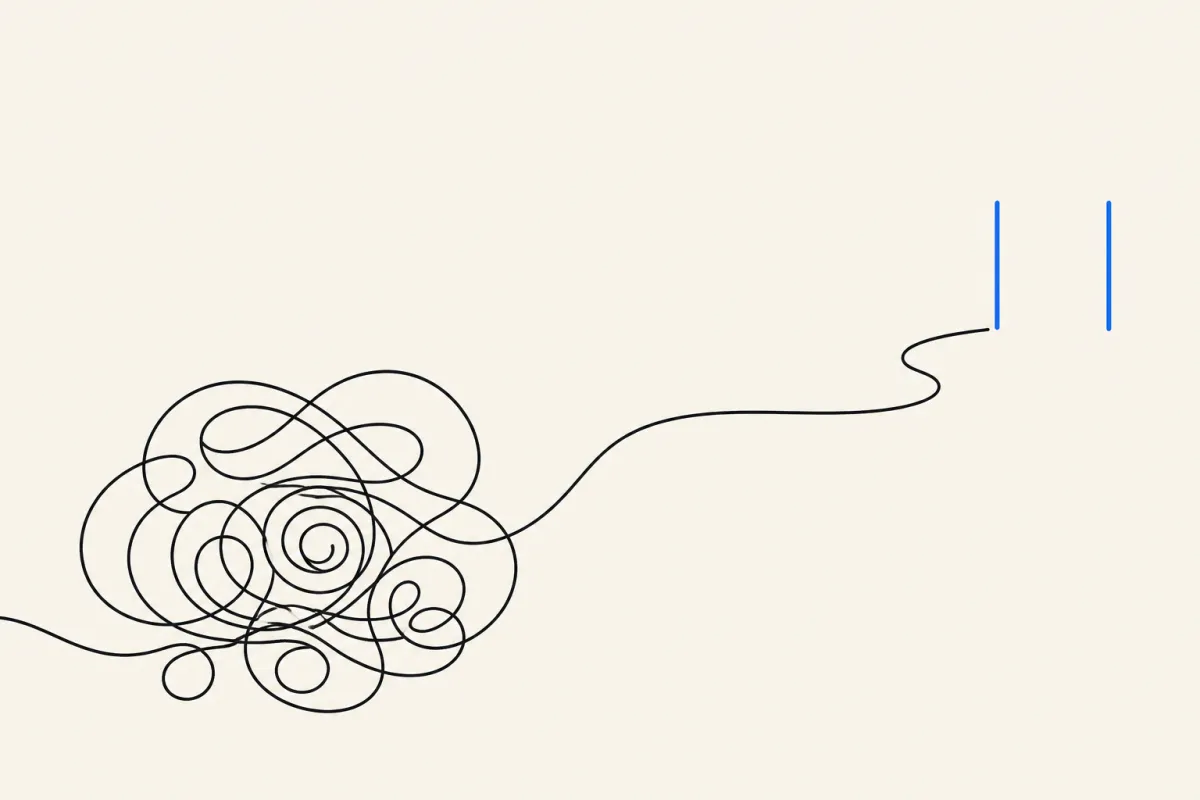
The Competence Refuge
The most respectable hiding place a capable person will ever find.
It's eleven at night and you're doing brilliant work.
The model is clean, the deck is sharp, the refactor is genuinely elegant -- whatever your version is, you're deep in it, and you're good at it, and it shows. Tomorrow people will be impressed. You'll be useful to everyone with a request and unavailable to exactly one decision: the one only you can make, the one that's been waiting for six months.
That's the competence refuge: retreating into work you're brilliant at to avoid a decision you're not sure of. Of all the loops I see in senior operators, this one is the most common, the most rewarded, and the best disguised.
A hiding place that pays you to stay
Most avoidance looks like avoidance. Scrolling, busywork, the third coffee -- nobody mistakes those for virtue. The refuge is different: it produces real output, wins real praise, and photographs beautifully on a calendar. You're not procrastinating; you're shipping. Everyone around you benefits from your hiding.
That's exactly what makes it load-bearing. A loop survives on its payoff, and no loop pays better than this one: you get the deep, immediate certainty of doing something you've mastered -- plus applause -- while the thing you're avoiding sits quietly out of frame. The tell is timing: watch what your calendar fills with in the exact weeks a hard call is on the table. The refuge always has room for you.
The player-coach squeeze
There's a version of this that owns people at a particular altitude: the operator who came up through the craft and now leads it. Player-coaches. The work that built your reputation is still right there -- you're still better at it than most of your team -- and the role now demands something else entirely: the reorg, the hard conversation, the bet only you can authorize.
So the squeeze: every hour of IC work is an hour you're objectively excellent, and every hour with the real decision is an hour you're a beginner again. Nobody chooses beginner at eleven at night. You drop into the code, the copy, the analysis -- the muscle that never says no -- and the decision ages another week.
It feels like contribution. At your altitude, it's often the most expensive work you can do, because anyone on your team could have done it, and no one on your team can do the thing it's protecting you from.
What the refuge is actually protecting
Not your time -- your identity.
Inside your craft, you know who you are: the person who's sure. The unmade decision offers the opposite -- a place where your judgment might be publicly, irreversibly wrong, where being smart doesn't guarantee being right. The refuge isn't shelter from work. It's shelter from uncertainty, built out of the one material you trust completely: your own excellence.
That's why this loop wears your best quality as a disguise, and why pointing it out feels like an insult instead of a description. Calling the work avoidance sounds absurd. The work is good. The work is the point. Except for the weeks when the work is the wall.
The question that finds it
One question cuts through: what does this week of excellent work allow me to keep not doing?
If the honest answer is "nothing" -- enjoy the craft; it's one of life's real pleasures. But if a specific unmade move surfaces the moment you read the question, then at least once this stops being invisible. The refuge only works in the dark.
You'll still be brilliant at the work. That was never the question.
Sources
On procrastination as short-term mood regulation -- avoiding an aversive task to feel better now; the competence refuge is its most productive disguise: Sirois & Pychyl, Social and Personality Psychology Compass (2013)