The Fade Is the Business Model
Why transformation wears off -- and why nobody selling it minds.
Ask someone who did a famous transformation program where they were two years later. A surprising number will answer by telling you about the second program.
They're not embarrassed about it. The retreat was powerful; the breakthrough was real; they'd recommend it to anyone. And eighteen months later they were back at another opening circle, or a new framework, or a higher tier of the same brand, chasing a feeling they distinctly remember having and distinctly remember losing.
The industry has a name for these people: returning customers. It says the name warmly, in investor updates.
The arc nobody puts on the sales page
Here is the shape of most premium transformation experiences, told honestly.
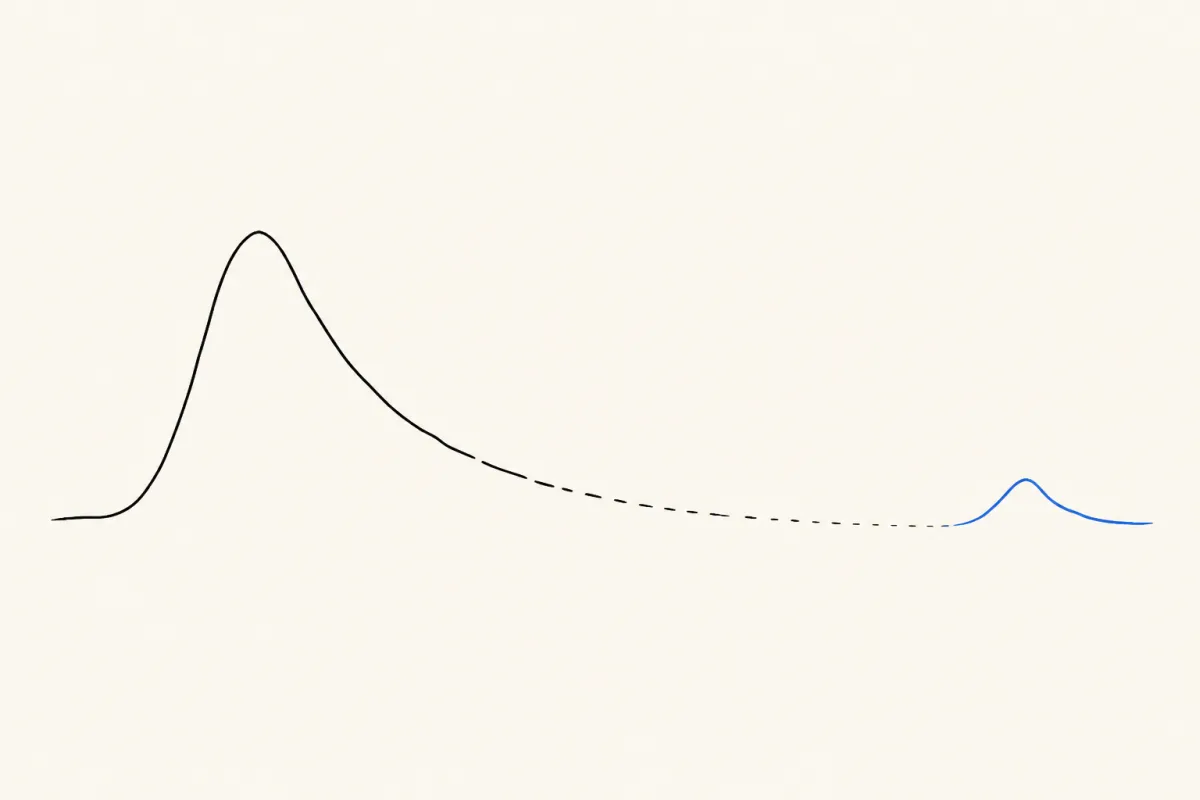
You arrive skeptical and leave electric. For two or three weeks you are a different person; you have the conversations you'd been avoiding, you wake up earlier, you tell your friends something genuinely changed. Around week six the old patterns start negotiating. By month three you've kept maybe one habit and a vocabulary. By month six the experience has become a story you tell, and the move you actually needed to make is still unmade.
That trajectory is so common it has a documented complaint attached -- the program high, the slow leak, the quiet return to baseline. Alumni describe it in forums with remarkable consistency. The interesting question isn't whether the fade happens. It's why an industry full of smart people has never fixed it.
No villain required
The cynical version says they designed it this way. I don't think that's right, and the truth is more uncomfortable: nobody had to design it.
A peak experience is easier to manufacture than a durable one; group intensity, skilled facilitation, and a week away from your life will reliably produce a peak. Durability is harder, slower, and mostly invisible -- it happens after everyone goes home, where there's nothing to photograph. So the industry optimized for what it could see and sell: the weekend. The testimonials are written in week one, when everything still glows. The metrics celebrate completion, not month six.
And the economics never pushed back. A program that fades doesn't lose a customer; it ripens one. The graduate who drifted back to baseline isn't a failure case -- he's warm, he's primed, he already trusts the brand, and he blames himself. Recurring revenue loves a result that wears off. The economics say it plainly: the platforms with the best numbers keep existing customers spending more each year, and the subscription brands collect most of their revenue on auto-renew, held or not. Nobody needed to twirl a mustache; the incentives did all the work while everyone stayed sincere.
That's the part worth sitting with: a fading product and a sincere industry can coexist indefinitely, because the fade pays and the sincerity sells.
The tell
Once you see it, you can't unsee it: durability is missing from the marketing.
Programs advertise the intensity of the experience, the credentials of the founder, the transformation stories from the room. Almost nobody leads with what their graduates are still doing at day ninety -- still moving, still making the calls, still out of the loop they came in with. Not because the question is unfair; because the honest answer is the one thing the model can't afford to put in writing.
When an industry consistently refuses to measure something it could easily measure, the silence is the data.
What durability would actually take
The fade isn't mysterious. Peak states decay; that's what states do-- review a hundred behavior-change theories and the same pattern recurs, the effect diminishing once the program ends. What persists is structure -- the pattern that fires automatically when the trigger shows up on a random Tuesday, long after the music and the group energy are gone.
Insight doesn't survive contact with a Tuesday. A loop does. So anything built to last has to work at the loop layer: name the specific pattern, interrupt it where it actually fires, and make the new move small enough and ordinary enough to run without willpower or a facilitator in the room. Boring, structural, unphotogenic work -- which is exactly why the weekend always wins the marketing budget.
If you're evaluating anything in this category, you only need one question: what does month three look like for your graduates, and how do you know? The programs built for durability will answer with specifics. The rest will answer with energy.
The industry doesn't need you to fail. It just doesn't need you to finish.
Sources
Weight-regain meta-analysis (JAMA Internal Medicine, 2025)