Arrival Doesn't Feel Like Arrival
You hit the number. The feeling you were promised didn't show up to meet you.
You got the thing -- the deal, the title, the number in the account you told yourself would change something. For a day, maybe a week, it did. Then the ordinary texture of your life closed back over it, and you were just you again, on to the next number, wondering privately why the arrival didn't feel like arrival.
You didn't do it wrong. This is the actual, well-documented shape of how achievement pays out, and once you see the mechanism, the letdown stops feeling like a personal failure and starts looking like something you can plan around.
The study that named it
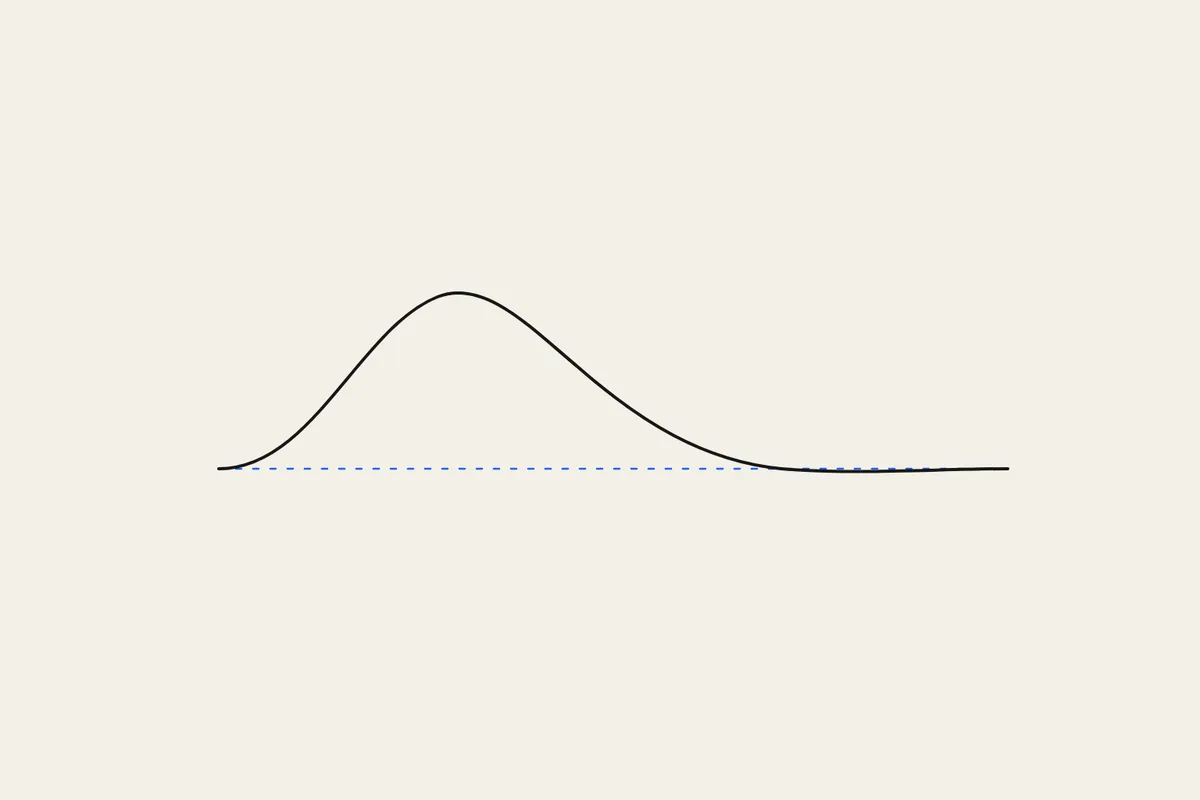
In 1978, researchers interviewed people who'd just won the lottery and people who'd recently become paraplegic in accidents, alongside a control group living ordinary lives. The finding held up: lottery winners were not measurably happier than the control group, and both winners and accident victims, given enough time, drifted back toward roughly the happiness level they'd started at. The lottery didn't deliver the lasting high anyone expected. The accident didn't deliver the permanent low anyone feared. People adapt -- to windfalls and to catastrophes alike -- faster and more completely than intuition predicts.
The mechanism has a name now: hedonic adaptation. Your baseline is stickier than any single event, good or bad. That's not a flaw in you. It's closer to a thermostat than a leak.
Why the win resets faster than you expect
Here's the part that actually stings: the adaptation isn't a punishment for achieving the wrong thing. It runs on anything -- the raise, the relationship, the recognition -- because the mechanism is comparative, not absolute. Once the new number is your new normal, your baseline recalibrates to it, and the next comparison point is whatever's above that. The achievement didn't fail to deliver. It delivered exactly what it had, and then your system moved the goalposts to keep functioning the way it always has.
This is why chasing the next milestone as the fix for the last one not landing keeps producing the same flat result. You're not choosing worse goals. You're expecting a permanent state from a mechanism that was only ever built to give you a temporary one.
What actually changes the math
Knowing the reset is coming doesn't cancel it, but it changes what you build around it. The competence refuge hides in work that feels safe; this hides in outcomes that feel like they should be enough and quietly aren't. The move isn't chasing a bigger number hoping this one finally sticks. It's building the actual texture of your days -- the work itself, the people in the room, the specific Tuesday -- so the baseline you adapt back to is one worth living in, not just a launchpad for the next number.
The win was never going to feel like arrival for long. That was never a defect to fix. It's the one honest thing to plan your next move around.
Sources
- On hedonic adaptation -- lottery winners showing no lasting happiness gain over controls, and accident victims returning toward baseline happiness over time: Brickman, P., Coates, D., & Janoff-Bulman, R. (1978), "Lottery Winners and Accident Victims: Is Happiness Relative?", Journal of Personality and Social Psychology, 36(8), 917-927.