Why Willpower Shows Up Late
"Just try harder" fails on the one thing not because you aren't trying, but because you're early to a fight that's already over.
You've been told the answer is discipline. More willpower, better habits, push through. And you've tried -- you are not a stranger to effort; you summon it for other people's deadlines every week. So why does it keep failing on the one move that's yours? Because willpower is aimed at the wrong layer of you, and it arrives too late to land.
You run on two systems
Your behavior runs on two systems -- a useful model, even if the neuroscience still argues how literally separate they are -- and they don't run at the same speed. One is fast, automatic, and below awareness: it fires patterns from cues without consulting you, the way you change lanes or finish a sentence. The other is slow, deliberate, and effortful -- the reasoning, planning part, the part you'd call willpower. The fast system always moves first, because it's built to; it's the one keeping you alive before the slow one has finished waking up.
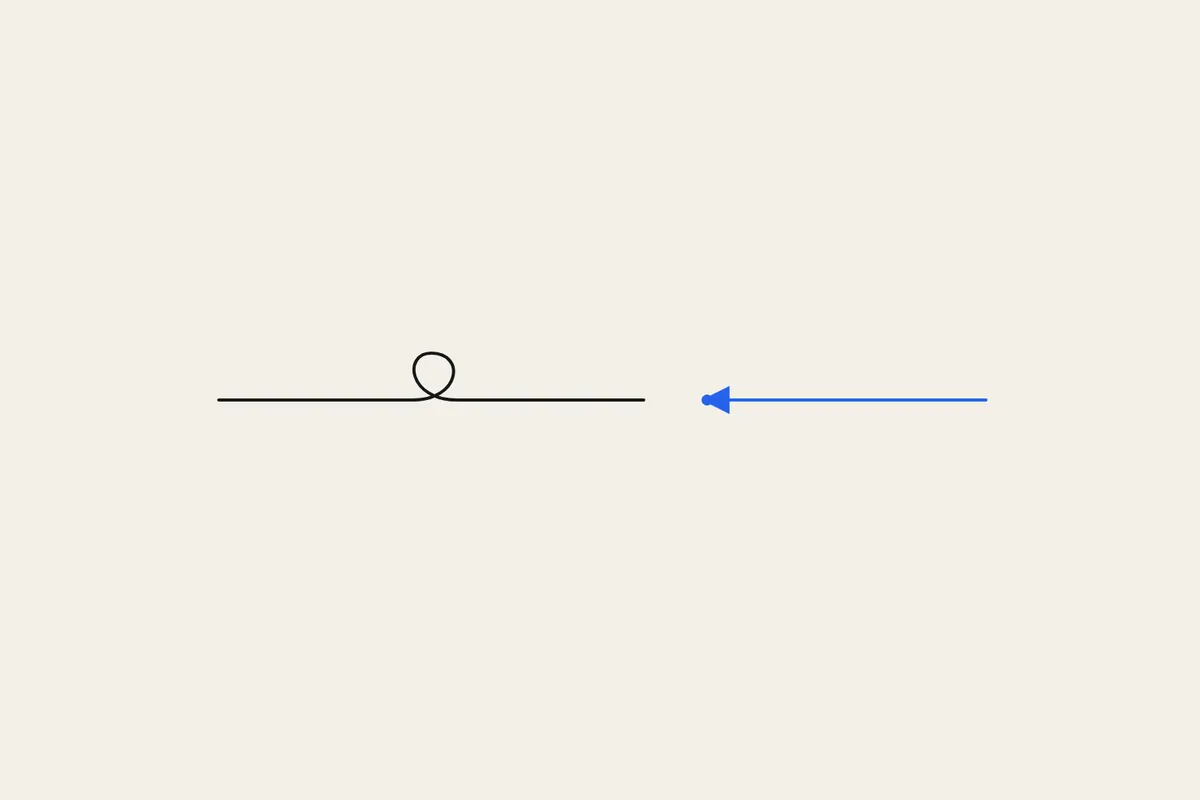
So picture the actual sequence. The trigger appears. The automatic move executes. The payoff lands. Then the deliberate system shows up, sees what happened, and disapproves. By the time willpower arrives at the scene, the play is over. You're not failing to exert it. You're exerting it late.
Why this is fatal for a loop
A loop lives entirely in the fast layer. Trigger, move, payoff -- all of it happens before the part of you that knows better gets a vote. That's why better arguments and more discipline don't touch it: they're competing in the wrong race. You can have genuinely formidable willpower and still lose to the loop every single time, because discipline is a referee trying to win the game by running onto the field after the whistle. The strength was never the problem. The timing was.
This also explains the cruelest part -- that you lose to it specifically on the things that matter most to you, where you'd happily spend any amount of effort. Effort isn't the currency the fast layer accepts.
What actually works is aimed earlier
This is why the things that genuinely change behavior never look like willpower. They don't fight the moment; they rig it in advance. A changed default. A precommitment. An implementation intention -- when X happens, I will do Y -- decided ahead of time, when the slow, deliberate system is the only one in the room. You're not trying to out-muscle the automatic response in the half-second it fires. You're choosing, while calm, what that automatic response will be.
The move
So stop grading yourself on willpower. It's the wrong instrument, reading the wrong layer, at the wrong moment. The leverage was never more effort in the moment of temptation; the moment is already lost by the time you feel it. The leverage is the small structural change you make when nothing is happening -- the default you switch, the commitment you witness, the inch you make irreversible -- that then fires on its own when you're not feeling strong at all.
The referee can't win the game from the sideline. But he can change the rules before kickoff, and that he can do anytime he likes.
Sources
- On habit and automaticity -- much of behavior fires automatically from cues, below deliberate control: Wood & Rünger, Annual Review of Psychology (2016).
- On implementation intentions -- deciding "when X happens, I will do Y" in advance reliably improves follow-through (Gollwitzer): Gollwitzer, implementation intentions and goal attainment.