The Quit-or-Stay Trap
The swinging feels like wrestling with the decision. It's how you avoid making it.
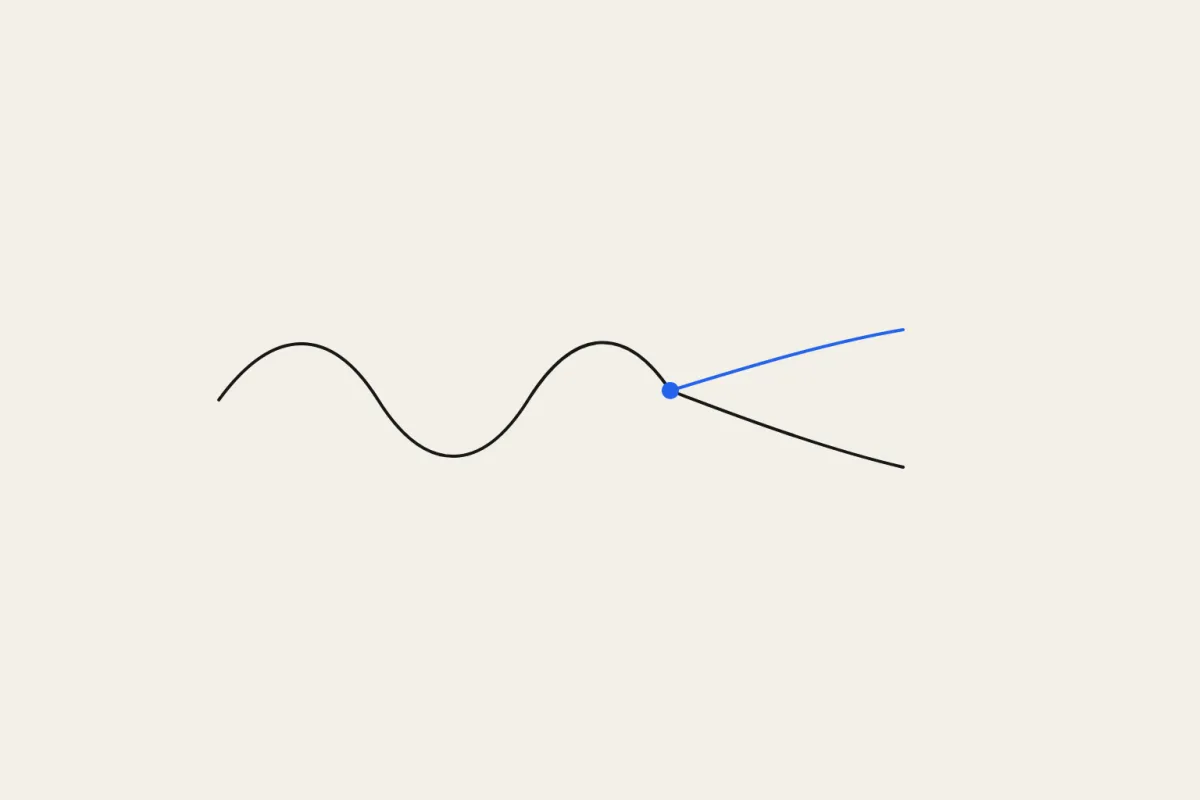
Monday, you're going to leave. You can see it clearly -- the relief, the clean start, the obvious rightness of going. By Thursday you're going to stay, and that's obvious too -- the reasons to leave look thin, the timing's wrong, you'd be crazy to walk away from this. Next Monday the pendulum swings back. You've been doing this for months, maybe years, and you call it thinking it through.
It isn't thinking it through
The swing is the loop. A trigger: a real either/or with no certain answer. An automatic move: oscillate -- swing to one pole, feel the brief relief of having "decided," swing back the moment the doubt returns. And here's the part that's easy to miss -- the payoff isn't reaching an answer. The payoff is the swinging itself. Each swing discharges the pressure of the open question just enough that you never have to sit in the one unbearable place: choosing, and then living with the choice.
So the cost is the months, and a decision exactly as unmade as it was at the start -- except now you're more tired, and more convinced the problem is that the choice is unusually hard. It usually isn't unusually hard. It's just unusually well-defended.
Why oscillating beats deciding -- for the loop
A made decision is irreversible and exposing. You might be wrong, and once you've chosen you can't pretend you didn't. The oscillation solves that elegantly: it keeps both options alive, so you never actually lose either one, and you never have to be the person who picked wrong. It's a way of keeping the decision without ever making it -- and as long as you're still weighing, you haven't failed at it yet.
The tell
Watch whether the swinging converges. Genuine deliberation narrows: each pass rules something out, and the question gets smaller. The oscillation doesn't narrow. It repeats. If you've made the same two cases to yourself a dozen times each, with no new information arriving, you're not deciding. You're pacing a cell and calling it a journey of consideration.
The move
The way out is not more analysis -- analysis is what the oscillation eats. It's a small irreversible act toward one pole: the first inch that can't be quietly swung back from. The conversation actually started. The date in someone else's calendar. The thing said out loud to a person who will remember you said it. Not the whole leap -- just one move that makes the pendulum stop, because now there's ground under one foot and swinging back would mean visibly taking it away.
The pendulum will keep swinging as long as nothing is at stake on either side. Put something real on one side, and it stops being a pendulum. It becomes a step.